

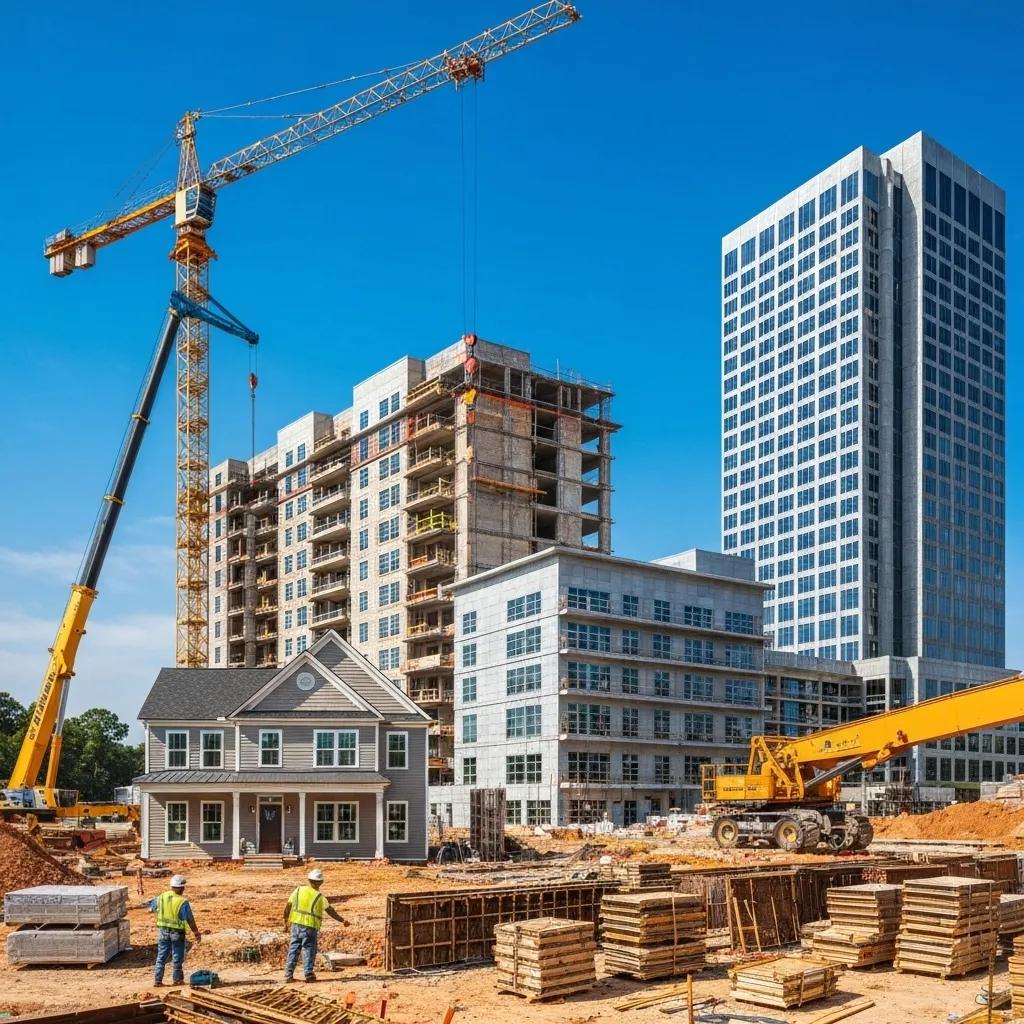
Building a typical home in Atlanta typically falls between $100 and $180 per square foot, while commercial projects often kick off at $240 per square foot and can climb well over $600. Grasping these distinctions is key for businesses, designers, builders, and homeowners aiming to fine-tune budgets and minimize financial exposure. This guide dives into average residential and commercial project expenses, compares the main cost drivers, examines permit fees, and highlights how expert structural engineering from Strut Engineering and Investment can boost cost-effectiveness. You’ll discover:
Expect residential construction costs in Atlanta to hover between $100 and $180 per square foot. This range is shaped by the quality of materials, labor rates, and the groundwork needed for the site. These figures reflect local wage trends and supply chain realities, providing a solid basis for budgeting single-family homes and custom residences.
Putting up a house in Atlanta generally runs from $300,000 to $700,000, not including the land. This averages out to $100–$180 per square foot for standard finishes and labor. For higher-end custom homes, costs can easily surpass $500 per square foot, accounting for premium materials, intricate structural designs, and extensive site preparation.
Building a house in Atlanta typically costs between $300,000 and $700,000, excluding land. This averages $100–$180 per square foot for standard finishes and labor. Higher-end custom homes can exceed $500 per square foot.

Residential project budgets are primarily influenced by four key cost drivers:
These elements work together to determine the final price. Fluctuations in material costs and labor availability can often necessitate budget adjustments. Understanding each factor equips stakeholders for more accurate financial planning.
For a typical Atlanta home, structural engineering fees usually range from 1% to 3% of the overall construction costs. This percentage can vary based on the complexity of the design and the specific site conditions. By optimizing foundation designs and load-bearing elements, structural engineers help minimize material waste and reduce the likelihood of costly change orders, ultimately leading to better budget adherence and enhanced safety.
Structural engineering fees for a typical Atlanta home range from 1% to 3% of construction costs, depending on design complexity and site conditions.
Atlanta’s permit fees for residential projects include a base charge of $150, plus a $25 technology surcharge. Additional fees apply for specialized inspections.
These permit fees ensure compliance with building codes and typically represent less than 5% of a residential project’s total cost, paving the way for safe and code-compliant construction.
Atlanta’s residential permit structure includes base fees of $150 plus a $25 technology surcharge, with additional charges for specialized inspections.
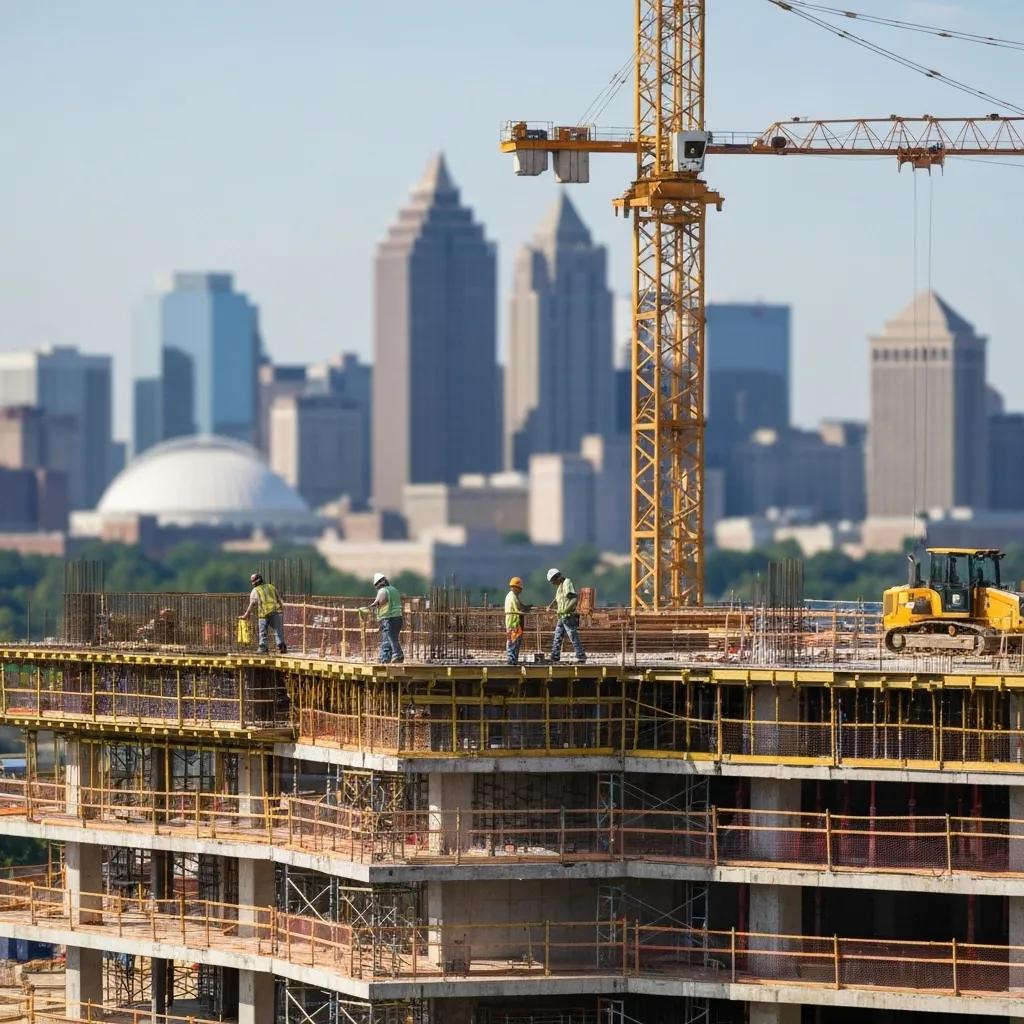
Commercial construction in Atlanta generally ranges from $240 to $680 per square foot. This reflects the larger scale, specialized systems, and increased regulatory complexity inherent in these projects.
Commercial construction in Atlanta averages $240–$680 per square foot, reflecting larger scale, specialized systems, and regulatory complexity.
Commercial projects in Atlanta typically cost:
Commercial project budgets are significantly influenced by four primary drivers:
Structural engineering enhances cost efficiency in commercial projects by refining steel and concrete layouts, implementing value engineering principles, and minimizing structural redundancy. Early collaboration with a firm like Strut Engineering and Investment facilitates optimized beam sizing, strategic shear wall placement, and effective seismic design, all of which reduce material and labor expenses.
Commercial permit and zoning fees are generally based on the project’s total valuation, typically ranging from 0.5% to 1.5%. Additional charges may apply for zoning variances and plan revisions. Inspection fees average $100–$200 per visit, reflecting the heightened regulatory oversight for commercial developments.
The divergence in residential and commercial construction costs stems from differences in scale, complexity, regulatory demands, and material intensity. Commercial projects typically require more robust structures and stricter adherence to compliance measures compared to residential builds.
Larger commercial footprints necessitate more substantial structural components, intricate mechanical systems, and complex scheduling, leading to higher per-square-foot costs than for single-family homes, which often involve simpler load paths and smaller construction teams.
Commercial trades often require specialized certifications and command higher union wages, potentially increasing labor rates by 10–20%. Similarly, while bulk material orders for commercial projects might offer discounts, they often involve higher-grade steel and fire-rated assemblies, driving up unit costs.
Atlanta’s commercial building codes draw from extensive International Building Code (IBC) chapters covering egress, fire resistance, and seismic design. Residential permits, conversely, follow the more straightforward International Residential Code (IRC) provisions. The increased complexity of IBC compliance naturally leads to higher plan review and inspection fees.
Advanced structural design, including performance-based engineering and value engineering workshops, can reduce over-engineering but requires significant upfront analytical effort. This strategic investment streamlines material usage and improves constructability, ultimately lowering lifecycle costs for both residential and commercial clients.
Structural engineering plays a crucial role in integrating safety, efficiency, and value engineering to enhance budget predictability and structural performance. This positions Strut Engineering and Investment as a premier partner for Atlanta projects seeking optimal outcomes.
These fundamental services help mitigate structural risks and assist homeowners in managing renovation and addition budgets effectively.
This specialized expertise ensures that capital is allocated efficiently to essential structural needs, rather than being spent on rework or modifications.
Strut Engineering and Investment combines in-depth knowledge of local codes, advanced modeling techniques, and proven value engineering practices to deliver structural solutions that balance safety with significant cost savings. Reach out to us today to request a quote and discover how our customized approach can enhance your project’s financial success.
Atlanta’s construction market is experiencing robust growth, though it’s influenced by ongoing labor shortages, material price fluctuations, and evolving regulatory requirements that will shape future cost trends.
The persistent scarcity of skilled trades is driving annual wage increases of 5–8%. This prompts many developers to allocate larger labor contingencies and explore modular construction methods to reduce on-site labor requirements.
Tariffs and supply chain disruptions have led to a 10–20% increase in steel and lumber prices over the past two years. This necessitates that clients adopt hedging strategies and prioritize early procurement to stabilize their budgets.
Atlanta saw an 18% surge in commercial construction starts in early 2023. Meanwhile, residential multi-family permits in 2024 were 13% below the ten-year average, indicating a market shift favoring office and mixed-use development sectors.
In the first half of 2023, Atlanta saw an 18 percent increase in construction starts compared with 2022, representing $5.4 billion in new projects.
Analysts anticipate a 4–6% annual rise in residential per-square-foot costs and a 3–5% increase for commercial builds. These projections are driven by sustained wage growth and targeted infrastructure investments across the metro area.
Atlanta’s permit fee structure varies by project type. Commercial valuations are assessed at higher rates and are subject to additional layers of zoning review.
Residential building permits typically cost around $150–$300, plus a $25 technology fee. Separate trade permits for electrical, plumbing, and mechanical work are priced between $50 and $150 each.
Commercial fees start at 0.5% of the total project valuation, potentially reaching up to 1.5% for high-rise structures. Zoning reviews or variances might add $500–$2,000, depending on the extent of the requested changes.
Frequent inspections—often occurring every 2,000 square feet or at key construction milestones—cost $100–$200 per visit. It’s wise to include contingency funds of 1–2% of the total budget to cover potential modifications required for compliance.
Building a house in Atlanta generally costs $300,000–$700,000, excluding land. This averages $100–$180 per square foot, depending on the level of finishes and site conditions.
Commercial construction in Atlanta averages $240–$680 per square foot, with costs varying by building type, from single-story offices to high-rise developments.
Structural engineering fees typically range from 1–3% of construction costs for residential builds and 1.5–4% for commercial projects, reflecting the increased complexity and regulatory demands of commercial work.
Residential permit fees start around $150 plus technical surcharges. Commercial permits are valuation-based at 0.5–1.5% of project cost, making them a relatively modest component of overall budgets.
Structural engineering optimizes budgets by refining foundation and framing designs, applying value engineering principles, and minimizing material waste. This ultimately enhances constructability and reduces costly change orders.
Understanding these cost dynamics empowers developers, architects, and homeowners to make well-informed decisions and protect their investments. To explore tailored structural solutions and receive a detailed budget analysis, request a quote with Strut Engineering and Investment—your trusted partner for efficient, code-compliant building in Atlanta.