

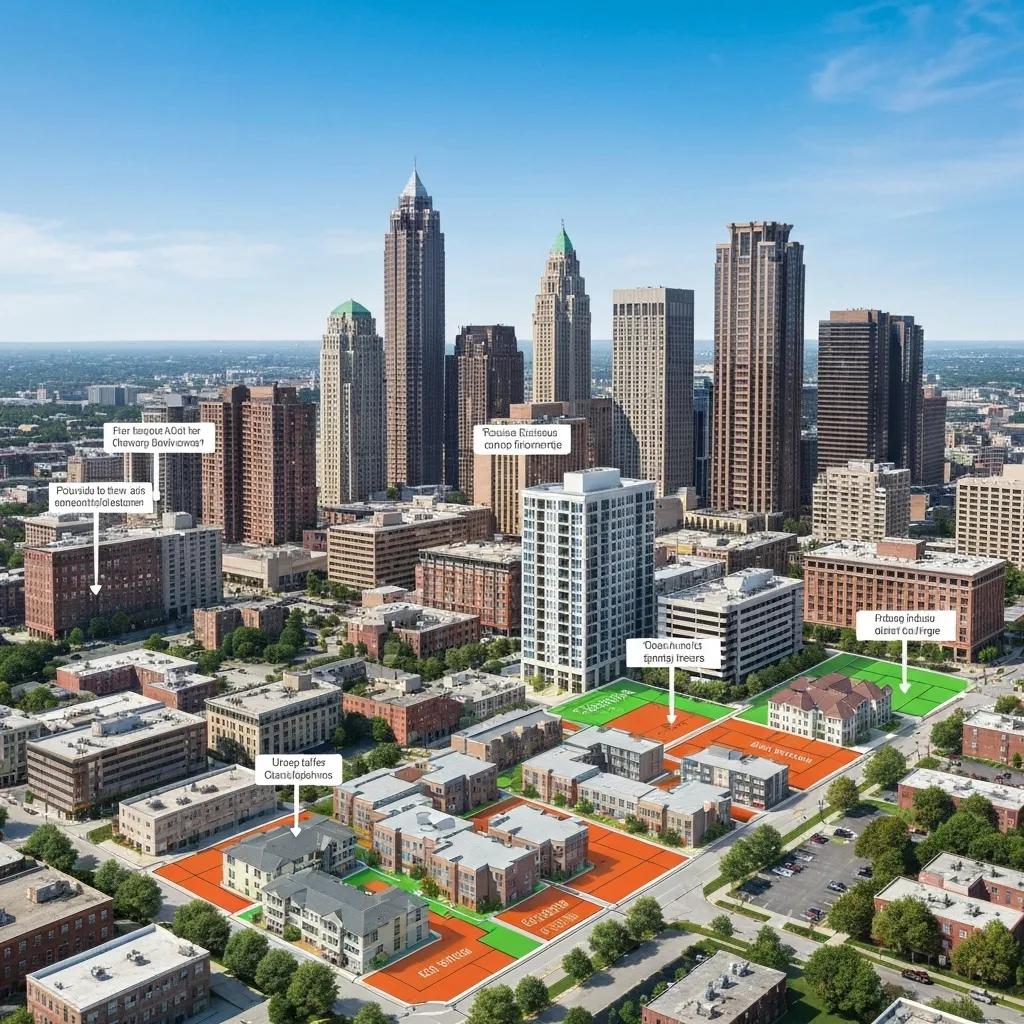
Mastering Atlanta’s commercial building regulations is your key to ensuring safety, sidestepping costly delays, and achieving construction triumph. From intricate structural integrity standards to critical fire and life-safety mandates, complex provisions can present challenges for developers, architects, and property owners alike. This guide offers a clear, actionable roadmap to navigating Atlanta commercial building codes. We’ll break down code requirements, demystify permit workflows, clarify zoning regulations, detail inspection standards, explain fire and life safety rules, identify when structural engineering is crucial, and provide strategies for avoiding violations. Discover how each regulatory layer safeguards occupants and property, how to streamline approvals, and when to bring in expert structural engineers to secure timely permits and ensure flawless compliance.
Atlanta’s commercial code framework is built on a foundation of robust safety, accessibility, energy efficiency, and structural performance, all designed to protect building occupants and surrounding properties. These regulations are largely based on the International Building Code (IBC), enhanced with Georgia-specific amendments. This approach distinguishes commercial from residential requirements and integrates fire, mechanical, plumbing, energy, and accessibility standards into a cohesive compliance system that Strut Engineering and Investment expertly applies in local projects.
The State of Georgia mandates the adoption of the 2018 International Building Code (IBC), augmented with Georgia-specific amendments, for all commercial construction. These codes are fundamental to ensuring safety and establishing rigorous standards for design, construction, and ongoing maintenance.
This authoritative source confirms the adoption of the IBC with Georgia amendments, providing the essential bedrock for understanding commercial building regulations in Atlanta.
The International Building Code sets the national benchmark for structural design, materials, egress, and fire protection. Atlanta’s adoption of the IBC ensures consistent, high-quality construction standards across all commercial developments. By referencing the IBC, the city aligns local projects with recognized national standards for load resistance, seismic considerations, and life-safety features, enabling Strut Engineering’s team to seamlessly integrate code-compliant structural analysis and sealed drawings from the earliest design stages.
Georgia’s amendments fine-tune specific IBC sections, particularly those concerning wind loads, hurricane mitigation, and material specifications, to address regional climate risks and state licensing requirements. Key adjustments include updated requirements for roof diaphragm strengths, modified details for storefront anchorage, and clearer guidance on engineered wood products. Our licensed structural engineers meticulously incorporate these amendments to optimize designs and facilitate faster plan reviews.
Georgia’s amendments to the IBC adapt sections on wind loads, hurricane mitigation, and material specifications to reflect the unique regional climate risks and state licensing requirements. These crucial amendments ensure buildings are robustly designed to withstand local environmental conditions.
This source clearly outlines the specific modifications made to the IBC for Georgia, directly influencing the requirements for commercial projects within Atlanta.
Commercial building codes are significantly more stringent than their residential counterparts, imposing stricter fire-resistance ratings, occupancy classifications, and accessibility provisions. These apply to a wide range of structures, including multifamily buildings, offices, retail spaces, and assembly venues.
Commercial buildings necessitate more robust fire walls, universally accessible routes, and enhanced structural redundancies, all of which are subject to specialized inspections and detailed plan reviews.
Beyond the IBC, several specialized codes complement the framework to address critical aspects of life safety, plumbing, mechanical systems, energy efficiency, and accessibility:
Each of these codes integrates seamlessly with the IBC, forming a comprehensive compliance matrix that expert structural engineering services are uniquely qualified to navigate.
Securing commercial permits in Atlanta involves a structured online application process, thorough plan reviews for code adherence, and scheduled inspections. A clear understanding of each phase is crucial for minimizing delays and ensuring smooth project approvals, regardless of scale.
To initiate a commercial permit application in Atlanta’s Accela portal:
Obtaining commercial permits in Atlanta is managed through an online application system (Accela), followed by detailed plan reviews and scheduled inspections. Familiarizing yourself with each step is key to reducing delays and achieving seamless approvals.
This official source provides essential details on the permit application process, a critical component for successfully navigating commercial construction in Atlanta.
Atlanta requires distinct permits for each building discipline to ensure specialized compliance is meticulously addressed:
Submitting all required permits in a coordinated package significantly enhances clarity and expedites the overall approval process.
Accelerate your permit timelines by implementing these effective strategies:
Strut Engineering and Investment offers dedicated permit assistance, combining meticulous technical plan preparation with direct liaison with city departments to enhance review efficiency and meet aggressive project schedules.

Atlanta’s commercial zoning ordinances are the bedrock of controlled land use, building form, and site development, fostering cohesive urban growth. Adhering to zoning compliance from the outset is a critical step for any commercial project.
Atlanta’s commercial zoning ordinances meticulously control land use, building form, and site development. Ensuring zoning compliance early in the process is paramount, as it directly influences project feasibility through land-use designations, building envelope limitations, and parking requirements.
This official source underscores the vital importance of zoning regulations in Atlanta, which profoundly impact the trajectory of commercial property development.
Atlanta features several key commercial zoning districts, each with specific allowances:
Carefully selecting the appropriate district ensures that permitted land uses and height allowances align perfectly with your project objectives and code parameters.
Zoning rules significantly shape project feasibility through several key factors:
Early zoning analysis conducted by Strut Engineering provides invaluable insights for site planning decisions, helping to optimize building footprints and maximize allowable development potential.
Atlanta enforces specific regulations for minimum off-street parking, maximum building heights, and required yard setbacks:
Strict adherence to these parameters ensures site plans meet all zoning requirements while facilitating efficient functional circulation.
Commercial building inspections are a critical process designed to verify strict adherence to code requirements through phased reviews and standardized assessment criteria, ultimately minimizing safety risks and confirming project quality.
ASTM E2018 provides a comprehensive framework for Property Condition Assessments (PCAs). This standard mandates that inspectors meticulously evaluate structural systems, the building envelope, mechanical and electrical components, and overall site conditions to produce a detailed report identifying material deficiencies and confirming code compliance.
Structural inspections meticulously review foundation depths, framing connections, load-bearing elements, and material specifications. The goal is to confirm precise conformance with IBC seismic, wind, and gravity load criteria. This rigorous process is vital for detecting deviations early and preventing downstream permit delays caused by unapproved alterations.
When inspectors identify issues, they follow a defined protocol:
This systematic cycle ensures that buildings meet all code requirements prior to occupancy approval, safeguarding both safety and legal compliance.
Fire and life-safety codes are paramount for protecting occupants and property. They mandate specific egress designs, suppression systems, alarm protocols, and regular testing to systematically reduce fire risks and enhance emergency response effectiveness.
NFPA 101 establishes critical standards for egress widths, exit signage, occupant load factors, and the use of fire-resistant materials. Atlanta rigorously enforces specific NFPA 101 chapters relevant to commercial assembly, healthcare, and high-rise occupancies to guarantee safe evacuation routes and robust fire barriers.
The City of Atlanta mandates adherence to the NFPA 101 Life Safety Code, which sets definitive standards for egress widths, exit signage, and fire-resistant materials, ensuring safe evacuation routes and effective fire barriers in all commercial buildings.
This source confirms the official application of the NFPA 101 Life Safety Code in Atlanta, a critical element for comprehensive fire and life safety compliance.
Frequently observed infractions include:
Promptly addressing these issues is essential to avoid fines and maintain continuous fire marshal certification.
All fire suppression systems must strictly adhere to:
Proper system design and diligent maintenance are fundamental to enhancing occupant safety and satisfying all code enforcement requirements.
Engaging a licensed structural engineer is crucial for ensuring designs meet code load requirements, material standards, and regional amendments. This proactive step prevents costly rework and streamlines the permit approval process.
Structural engineers provide indispensable services, including:
Their specialized expertise provides the technical foundation for safe, code-compliant projects, from initial concept through final construction.
State law mandates the involvement of a licensed engineer for:
Securing professional engineering seals at the project’s outset is vital to prevent plan rejections and mitigate potential legal liabilities.
Proactive structural reviews are instrumental in identifying potential non-conformities before submission. They clarify ambiguous code sections and optimize structural member sizing, significantly reducing the number of revision rounds required and ensuring smooth interactions with building officials.
Addressing code requirements diligently from the start, adhering to best practices, and securing expert guidance are essential to protect projects from fines, work stoppages, and potential legal actions.
Common violations encountered include:
Awareness of these common pitfalls guides the implementation of preventive measures and the use of detailed plan checklists.
Our expert team provides comprehensive support for remediation, including:
This end-to-end remediation process effectively restores code conformity and re-establishes project momentum.
Failure to comply with Atlanta’s commercial building codes can result in severe repercussions:
Investing in professional code expertise is a strategic decision that protects your project’s budget, schedule, and reputation.
Successfully navigating Atlanta’s commercial building code framework requires clarity, precision, and proactive strategies. By thoroughly understanding key requirements, streamlining permit processes, aligning zoning and inspection standards, integrating fire and life-safety mandates, and leveraging expert structural engineering services, you can effectively minimize risk, accelerate approvals, and deliver safe, compliant projects. For comprehensive support at any stage of your commercial development, contact our team to request a consultation and ensure your next build is completed on time and fully compliant with all codes.