

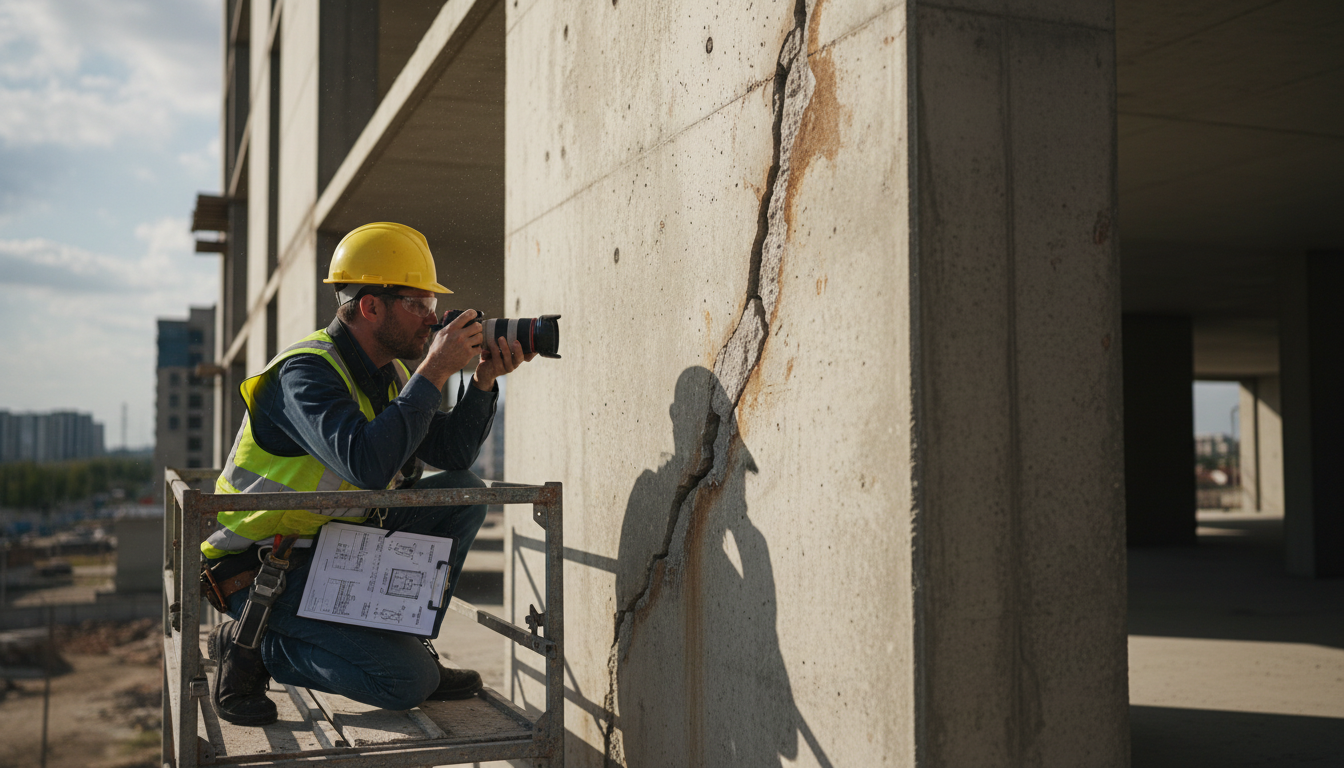
Construction defect cases are one of the most common types of complex civil litigation involving structural engineering. They’re also one of the most technical. A case may involve dozens of alleged defects across multiple building systems, thousands of pages of project documentation, years of construction history, and a handful of technical experts in different disciplines. The structural engineer is often the central technical witness — the one whose opinions determine whether there’s liability and how significant the damages are.
This guide explains the structural engineer’s role at each phase of a construction defect case, the most common types of structural defects we see in the Southeast, the methods engineers use to investigate and document them, and the key considerations for attorneys managing these matters. It’s a companion piece to our guide on choosing an expert witness, focused specifically on the construction defect setting.
Construction defect is a broad term. From an engineering standpoint, defects generally fall into several categories:
Errors in the original design — wrong member sizes, missed load combinations, inadequate connections, mismatched drawings between disciplines. Design defects are the responsibility of the engineer of record (for structural) or architect (for architectural). They’re often identified retroactively through review of the original drawings and calculations against current code and standard of care.
Errors in how the design was built. Wrong bolts. Missing welds. Substituted materials. Rebar in the wrong place. Inadequate concrete curing. Connections that weren’t installed per the drawings. Construction defects are the responsibility of the contractor.
The materials themselves were defective or substandard. Concrete with inadequate strength. Steel with chemical composition outside spec. Lumber that was substandard grade. Material defects can be the fault of the supplier, the tester, or the contractor depending on chain of custody.
Items that were built correctly per drawings but where the installation method caused damage — over-tightened bolts, inadequate curing conditions, improper sequencing. These can be either contractor or subcontractor responsibility.
Damage that occurred after construction due to factors the owner, contractor, or maintenance team should have addressed — water infiltration, deferred maintenance, overload from equipment additions, improper subsequent modifications.
The structural engineer’s job is to investigate each alleged defect, determine whether it actually exists, characterize its significance, identify its likely cause, and form an opinion about who is most likely responsible.
From our forensic engineering practice across the Southeast, the most common structural defects in construction defect cases include:
Foundations that weren’t built per the geotechnical recommendations, inadequate compaction of fill, missing or undersized reinforcement, differential settlement caused by construction errors rather than soil conditions, foundations that exposed rebar to moisture causing subsequent corrosion. Foundation defects are common in buildings constructed during boom periods when inspection was stretched thin.
Missing connections between framing members, inadequate connection hardware, wrong beam sizes, missing headers over openings, incorrect stud spacing, mid-span splices that weren’t designed to carry the load. Load path defects are a major category because they often don’t cause obvious damage until a specific load event exposes the weakness.
Water getting into structural elements and causing decay, corrosion, or loss of capacity over time. Flashing that was installed incorrectly. Membranes that were punctured. Weep systems that were clogged or missing. Water intrusion defects typically start as non-structural issues but become structural problems over years.
Work that doesn’t meet the applicable building code. Non-compliant stair dimensions. Missing fire-rated assemblies in structural elements. Load assumptions in the design that don’t match code requirements. Inadequate lateral systems.
Concrete that was placed in freezing weather and never reached design strength. Welds that were made without qualified welders. Rebar that was placed without adequate cover. Precast connections that weren’t grouted correctly. Individual workmanship defects can range from minor to catastrophic.
In Miami, Orlando, and other Florida markets, construction defect cases frequently involve alleged violations of hurricane-specific building code provisions. Missing hurricane clips. Inadequate attachment of roof sheathing. Missing continuous load path from roof to foundation. These defects become apparent when a hurricane actually hits — often years after construction.
A well-run defect investigation follows a disciplined methodology. The general sequence:
Before visiting the site, the engineer reviews:
This review establishes what was supposed to be built versus what the complainants allege is actually there.
Most construction defect cases involve extensive site work — sometimes multiple inspection days across multiple buildings. The engineer:
Many defect cases require opening up construction to see what’s behind the finishes. Opening a wall to inspect framing. Coring a slab to examine rebar placement. Removing siding to expose sheathing and weather barriers. Destructive investigation has to be coordinated with the owner, the contractor, any insurers, and opposing counsel so that evidence is preserved.
Concrete compression testing. Rebar chemical analysis. Wood moisture content and species verification. Steel tensile testing. Fasteners and bolt grading. Material testing is done by accredited laboratories following standard protocols. The results become exhibits.
With documentation in hand, the engineer analyzes each alleged defect:
For each defect, the engineer forms an opinion and documents the basis for that opinion in the written report.
The formal report is the central work product in a construction defect case. A good report:
Reports in major construction defect cases can run hundreds of pages with extensive photographic exhibits and appendices.
If the case doesn’t settle, the expert gives deposition testimony and eventually trial testimony. In major defect cases, depositions can run multiple days. Cross-examination on specific defects can be intense. Expert witness experience and preparation matter enormously at this stage.
Condominium construction defect cases — particularly in Florida and the coastal Carolinas — have their own characteristics:
These cases are resource-intensive for all parties. The expert needs to be organized, systematic, and able to handle large document volumes and detailed multi-defect analyses.
A few things that help the engineer-attorney working relationship on construction defect cases:
What’s the difference between a construction defect expert and a forensic engineer?
Substantial overlap. Most construction defect experts are forensic engineers — they investigate what happened and why. The “expert witness” label adds the testimony component. A forensic engineer who never testifies isn’t really functioning as an expert witness; an expert witness without forensic investigation experience is likely to be weak under cross-examination.
Can one expert cover every type of defect in a case?
Rarely. Complex cases typically involve multiple experts across disciplines — structural, geotechnical, roofing and waterproofing, mechanical, electrical, code compliance, damage estimation. The structural engineer coordinates with the other experts and stays within their area of competency.
How long does a construction defect investigation take?
It varies enormously with scope. A simple single-building investigation may take a few weeks. A complex condominium case involving multiple buildings and systemic defects can take months of active investigation plus additional time for report writing and deposition preparation.
Do I need an engineer for all construction defect allegations?
Only the ones involving structural or engineered systems. Pure aesthetic complaints (paint finish, tile alignment) don’t require engineering. Anything that involves load-bearing members, water infiltration affecting structure, foundation performance, or code compliance typically does.
What’s Florida’s Chapter 558, and how does it affect experts?
Chapter 558 of the Florida Statutes requires that construction defect claims be preceded by written notice to the contractor, with an opportunity to inspect and cure before litigation. Experts are often retained during the 558 phase to document defects and help structure the notice. Early 558-phase engagement can lead to early settlements before formal litigation.
Can a structural engineer opine on non-structural defects?
Experts should stay within their area of specialty. A structural engineer shouldn’t be opining on roofing systems, HVAC performance, or stucco finishes unless they also have credentials in those areas. Overreaching creates cross-examination opportunities for opposing counsel and erodes credibility with the fact-finder.
What about contractor defense — do structural engineers represent contractors in these cases?
Yes. Experienced structural expert witnesses work for both plaintiffs and defendants. The engineering methodology is the same; the engagement is different. Defendants typically engage experts to evaluate the plaintiff’s allegations and identify weaknesses in the plaintiff’s expert reports.
Handling a construction defect case involving structural issues? Strut Engineering & Investment, Inc. provides forensic investigation, written reports, deposition testimony, and trial support for construction defect litigation across 28+ states. Contact our expert witness team for a confidential case consultation.