

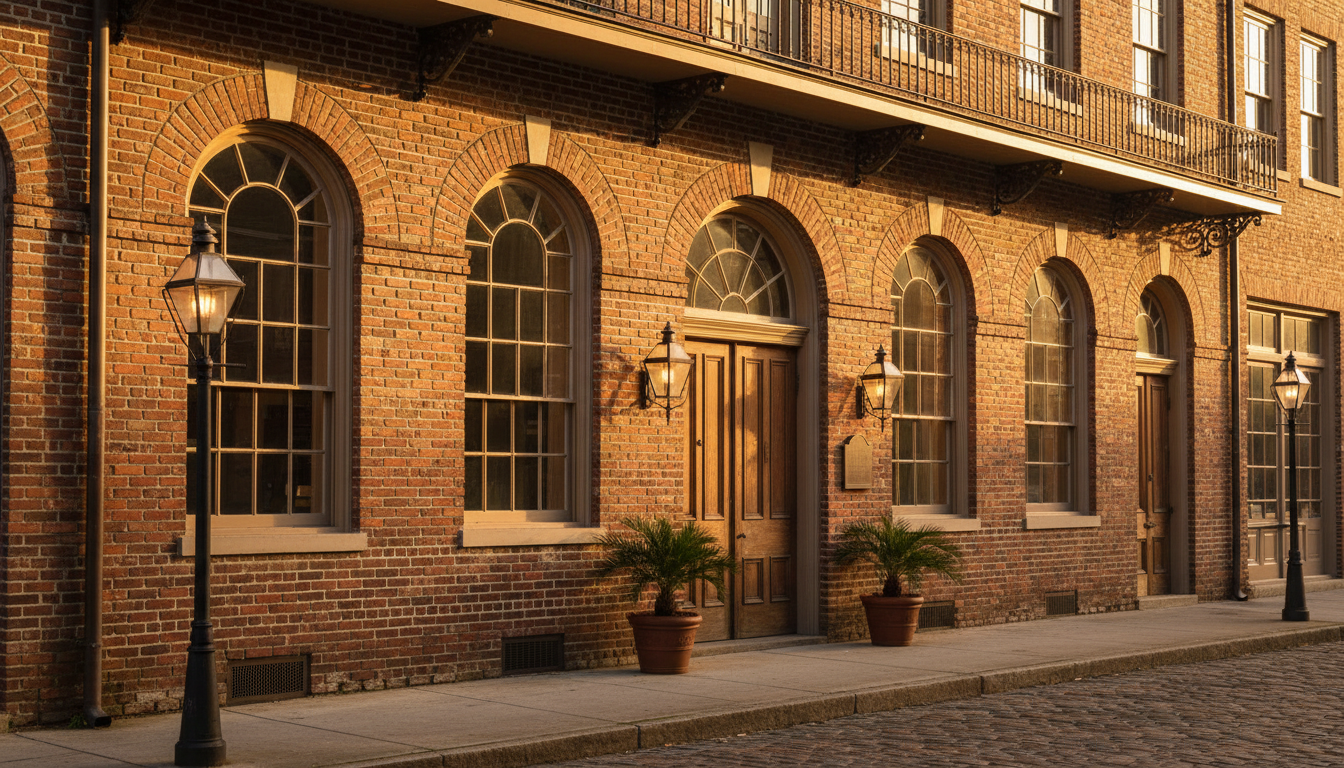
The Southeast has some of the richest historic architecture in the country. Savannah’s colonial grid, Charleston’s antebellum mansions, Atlanta’s Inman Park Victorians, Nashville’s early-1900s commercial buildings, and Miami’s Mediterranean Revival stock are all part of the region’s identity. Working on these buildings is one of the most technically interesting — and most demanding — parts of structural engineering.
Historic building structural engineering is not the same as rehabilitating a 1980s warehouse. The materials are different, the construction methods are different, the available documentation is different (usually nonexistent), and the regulatory environment is different. Preservation boards, historic district commissions, and Secretary of the Interior’s Standards all shape what you can and can’t do. This guide explains how experienced structural engineers approach historic buildings, what makes them distinctive, and what owners should expect when they commission work on a pre-1950 structure.
A building built in 1890 is not just an older version of a building built in 1990. It’s a different kind of building. A few of the key differences:
Most pre-1950 masonry buildings are unreinforced — solid brick or stone walls with no internal reinforcing steel. Modern buildings use reinforced masonry with grouted cells and rebar. Unreinforced masonry is a completely different structural system. It works beautifully in compression (which is most of the load) but poorly in tension (which matters for seismic events, wind loads, and out-of-plane forces).
Engineers working with unreinforced masonry need a different analytical toolkit than engineers working with modern materials. Rules of thumb from reinforced masonry don’t translate.
Late-19th and early-20th century commercial buildings often use heavy timber framing — large-dimension posts and beams connected with iron strap hardware or mortise-and-tenon joinery. The material is often old-growth wood with significantly better structural properties than modern dimension lumber, but it’s also subject to checking, splitting, insect attack, and rot.
Modern grading tables and allowable stress values don’t always apply to heavy timber from a hundred years ago. Engineers rely on visual inspection, moisture content measurement, and sometimes material testing to establish what the existing timber can actually carry.
Pre-1900 masonry was laid with lime mortars, not the Portland cement mortars that became common later. Lime mortar is softer than Portland cement — and that’s deliberate. Lime mortar flexes with the building and allows masonry walls to accommodate small movements without cracking. When well-meaning preservation teams repoint historic walls with modern mortars that are harder than the original brick, they destroy the building. The brick faces start spalling because the hard mortar doesn’t give, and moisture migrates through the brick instead.
A structural engineer working on historic buildings has to know the difference and specify mortar mixes compatible with the original fabric.
Some late-19th century commercial buildings include cast iron or wrought iron structural elements — decorative columns on storefronts, tension rods, bracing systems. These materials have their own structural characteristics and their own failure modes. Cast iron is strong in compression but brittle in tension and shear. Wrought iron is more ductile but also subject to fatigue.
Concrete buildings from roughly 1910–1950 often have early concrete mixes that are lower-strength and more variable than modern concrete. Rebar placement may not match modern practice. Cover over rebar is often inadequate, leading to corrosion problems that emerge decades later. Testing and probing are often needed to characterize what’s actually in place.
Pre-1950 foundations range from rubble stone to brick to early concrete. They may sit on inadequately compacted soil, on wood grillages, or on natural bearing strata that have since changed. Foundation evaluation in historic buildings is a hands-and-knees exercise that sometimes involves exploratory excavation.
Our practice works on historic buildings across the region. A few of the distinct contexts:
Savannah’s historic district is one of the largest in the country — over 2,500 historic buildings across 22 squares. The building stock ranges from colonial-era brick townhouses to late-19th century commercial blocks. Most are unreinforced brick masonry on lime mortar over brick and tabby foundations.
Key structural challenges: settlement on soft coastal soils, salt-laden humidity accelerating brick deterioration, hurricane exposure, and strict preservation review. The Historic District Board of Review oversees exterior changes, and every alteration has to respect the district’s character. See our Savannah structural engineering services.
Charleston’s historic buildings reflect its colonial, antebellum, and postbellum history. The famous single-house typology, raised ground floors, and stucco-over-brick construction are all part of what makes the city. Hurricane Hugo in 1989 reshaped how Charleston thinks about historic building structural performance — a lot of current rehabilitation work is still catching up on seismic and wind retrofits that weren’t required when the buildings were originally built.
The Board of Architectural Review oversees alterations, with stricter requirements inside the Old and Historic District. Charleston structural engineering frequently involves hurricane strengthening combined with preservation constraints.
Atlanta’s historic districts — Inman Park, Grant Park, Cabbagetown, Virginia Highland, Druid Hills — contain late-19th and early-20th century Victorian, Craftsman, and Queen Anne homes along with industrial buildings like the former Fulton Bag and Cotton Mills. Work is overseen by the Atlanta Urban Design Commission for designated districts.
Common issues: termite damage in old-growth wood framing (the Southeast termite pressure is significant), clay soil foundation movement, and adaptive reuse of industrial buildings into mixed-use developments.
Nashville’s Printers Alley and historic Second Avenue. Birmingham’s Sloss Furnaces and cast iron district. Asheville’s Grove Arcade. Early-20th century textile mills across the Carolinas that are being converted into residential and office space. Each has its own material mix and its own preservation authority.
Working on a historic building follows a recognizable sequence that looks similar to general rehabilitation work but with additional preservation-specific steps.
Before the engineer goes to the site, they (or the owner’s consultant) research what’s available: original building permits, historic Sanborn insurance maps, tax records, previous preservation reports, National Register documentation, and any existing drawings. This establishes the likely original construction type, approximate date, and any documented modifications over time.
On site, the engineer walks every space. They photograph cracks, deformations, deterioration, and repairs. They measure key dimensions. They probe accessible framing. They sample materials where necessary. They note areas of active water intrusion, insect damage, fire damage, or other problems.
On many historic buildings, this survey takes multiple days — and the findings often surprise the owner. The building almost always has more going on than was visible at first glance.
For significant historic building projects, some material testing is usually required:
Testing is invasive — you’re removing small amounts of material from a historic fabric — so it has to be planned carefully to minimize impact.
With material properties established and geometry documented, the engineer analyzes what the building can carry. For modern structural systems, this is a routine calculation. For historic systems — unreinforced masonry, heavy timber, early concrete — it’s more nuanced. Published guides (ASCE 41 for seismic evaluation of existing buildings, FEMA preservation guides, Association for Preservation Technology references) provide methodology that doesn’t apply to new construction.
Any rehabilitation or reinforcement design has to respect preservation requirements. That means:
A reinforcement scheme that works structurally but fails preservation review is a scheme that doesn’t get built.
For listed or district-protected buildings, almost every alteration requires review by a preservation board or commission. The structural engineer typically participates in these reviews, explaining what’s being proposed, why it’s needed, and how it respects preservation standards. Experienced engineers know which boards are strict and where the hard lines are.
Construction on historic buildings is slow and deliberate. Surprises are constant — opening a wall reveals conditions nobody expected. Engineers responsive to field conditions are essential. Field visits are more frequent than on new construction.
Not every structural engineer is comfortable with historic buildings. A few things to verify when hiring:
What makes a historic building “historic” from an engineering perspective?
Generally, buildings built before roughly 1950 are treated as historic from a structural standpoint because they use materials and construction techniques that differ from modern codes. Buildings on the National Register, in a historic district, or formally designated at the local level carry additional regulatory requirements.
Can you add modern mechanical systems to a historic building?
Yes, but carefully. HVAC equipment is heavy and has to be supported somewhere — usually new framing or strengthened existing framing. Ductwork has to be routed without cutting into structural members. Access through historic walls and floors requires planning. The structural engineer works with the mechanical engineer and architect to find solutions that don’t damage historic fabric.
Are historic buildings always safe to occupy?
Not necessarily. Some historic buildings have deficiencies (seismic, wind, gravity) that would require evacuation in a new building. The question is how those deficiencies compare to acceptable risk for the intended use. An existing building can often remain in use while upgrades are designed and phased in.
Do I need a historic preservation architect and a structural engineer separately?
For anything substantial, yes. A preservation architect manages architectural character, coordinates with review boards, and specifies appropriate materials. The structural engineer handles the engineering. The two roles are distinct but must work closely together.
How much more does historic building engineering cost?
It’s almost always more involved than engineering for a comparable new or modern-era building because of the extra investigation, material testing, preservation constraints, and design iteration required. The right comparison isn’t “what would this cost as new construction” — it’s “what’s the value of preserving this building intact.” For buildings with historic or cultural significance, that value is often substantial.
What happens if the existing building doesn’t meet current code?
Most jurisdictions allow existing buildings to remain under the code they were built to, as long as no work is being done. When you alter the building, the current code applies — but usually only to the altered portions. Historic buildings often have mechanisms for alternate compliance if strict code compliance would damage historic fabric.
Do I need special insurance for a historic building project?
The contractor should carry standard general liability plus coverage appropriate for working around historic fabric. The engineer should carry professional liability (errors and omissions). For significant historic projects, an all-risk builder’s risk policy with historic building coverage is typically required by lenders.
Working on a historic building in Savannah, Charleston, Atlanta, Nashville, or elsewhere in the Southeast? Strut Engineering & Investment, Inc. provides preservation-sensitive structural evaluation, rehabilitation design, and construction administration on pre-1950 structures. Contact our structural rehabilitation team for a consultation.