

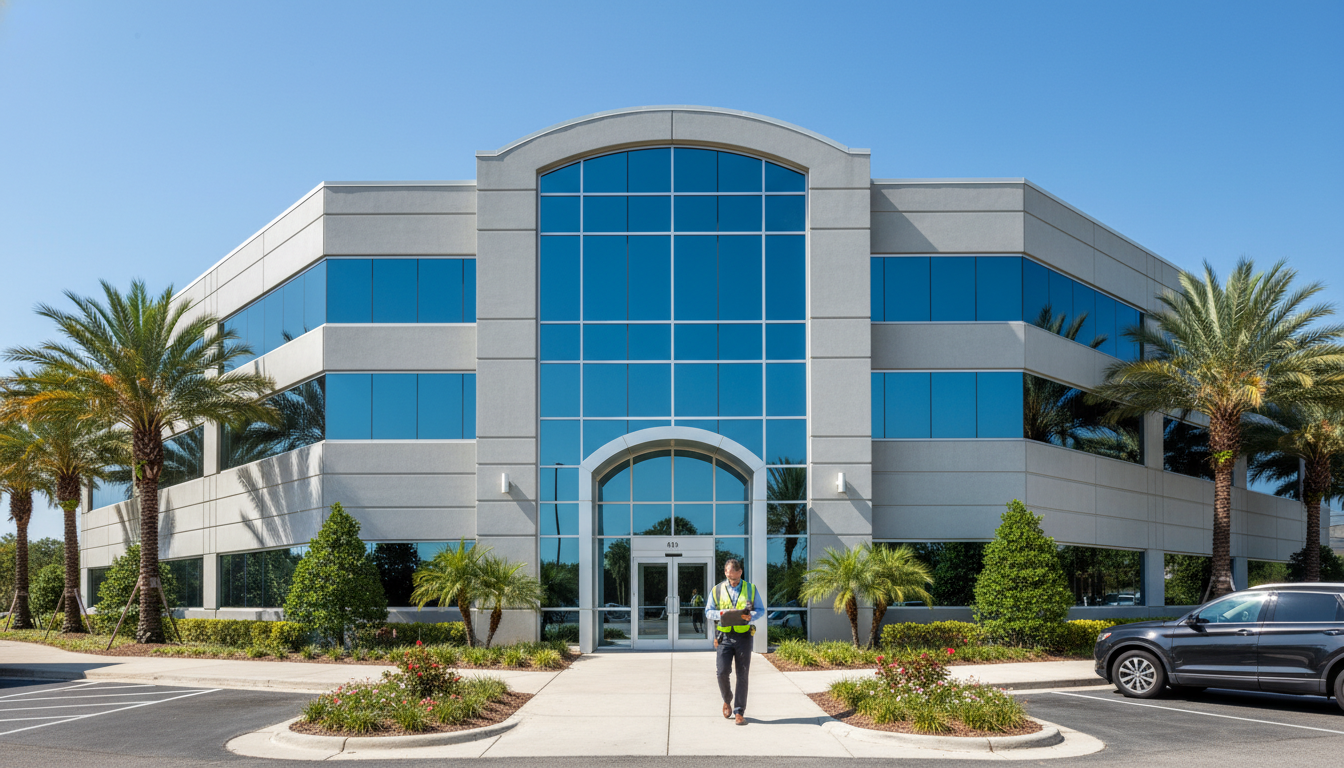
Any experienced commercial real estate investor knows that buying a property without due diligence is buying a lawsuit waiting to happen. Two of the most common due diligence reports — the Property Condition Assessment (PCA) and the Phase 1 Environmental Site Assessment (Phase 1 ESA) — are often confused, sometimes ordered interchangeably, and not infrequently skipped when they shouldn’t be.
This guide explains what each report covers, who performs them, what they cost, how they work together in a commercial real estate transaction, and the role of a structural engineer in the PCA process. If you’re buying, selling, or financing a commercial property in 2026, you need to understand both.
A Property Condition Assessment is a structured evaluation of the physical condition of a commercial building and its systems. The PCA is performed by a qualified engineer or architect and results in a report that tells the owner, buyer, or lender the current condition of the asset and what it will cost to maintain over time.
The industry standard for PCAs is ASTM E2018 — the “Standard Guide for Property Condition Assessments: Baseline Property Condition Assessment Process.” Lenders, REIT buyers, and institutional investors typically require a PCA prepared in conformance with ASTM E2018 as part of their underwriting. The standard defines:
A PCA that’s not ASTM E2018-compliant isn’t usable for institutional purposes — it won’t be accepted by lenders, insurers, or sophisticated buyers.
A comprehensive PCA looks at every major building system:
The PCA doesn’t test every component to failure — it’s a visual and documentation-based assessment, not a destructive inspection. But a well-done PCA will identify significant issues and quantify the cost to address them.
A Phase 1 Environmental Site Assessment is an entirely different animal from a PCA, even though both are “due diligence.” A Phase 1 ESA evaluates environmental contamination risk — whether the property has been impacted by historical or current uses that may have released hazardous substances into the soil, groundwater, or building.
The Phase 1 ESA is governed by ASTM E1527, most recently updated as E1527-21. Like the PCA standard, Phase 1 defines required scope including:
Phase 1 compliance with ASTM E1527 is critical because it’s tied to the Federal “All Appropriate Inquiry” (AAI) rule under CERCLA (Superfund law). Only an ASTM-compliant Phase 1 gives the buyer protection from certain environmental liabilities.
The Phase 1 doesn’t involve actual soil or water sampling. If the Phase 1 identifies Recognized Environmental Conditions (RECs), the buyer may choose to proceed with a Phase 2 ESA, which does include sampling and laboratory analysis.
| Factor | PCA | Phase 1 ESA |
|---|---|---|
| Standard | ASTM E2018 | ASTM E1527 |
| Focuses on | Physical condition of building & systems | Environmental contamination risk |
| Performed by | Licensed engineer or architect (structural PE preferred for structural portions) | Environmental professional meeting ASTM criteria |
| Includes sampling | No (visual + documentation) | No (records + visual only) |
| Deliverable | Condition report + capital expense schedule | Environmental risk report + identified RECs |
| Typical turnaround | 2 – 6 weeks | 2 – 4 weeks |
| Required by lenders? | Commonly on mid-size and larger commercial loans | Almost universally for commercial loans |
| Liability shield provided? | No direct legal protection | CERCLA “innocent landowner” protection if AAI-compliant |
Yes — almost always, if you’re doing real due diligence on a commercial property transaction. The two reports answer entirely different questions:
Neither answers the other’s question. A clean PCA with zero structural issues can sit on a property with a leaking underground tank that will be expensive to remediate. A clean Phase 1 can sit on a building with a failing roof that will cost serious money to replace. You need both to see the full picture.
For most commercial acquisitions, lenders will require both. Smart buyers commission them independently even when a lender isn’t involved.
A typical commercial acquisition workflow looks like this:
The PCA and Phase 1 are decision-making tools. They don’t just document condition — they give the buyer leverage to renegotiate or walk away from a bad deal.
The “structural” portion of a PCA is one of the most important and most commonly under-scoped sections. A PCA performed by a non-engineer might include a cursory visual note (“foundation appears intact”) without the technical capacity to identify subtle structural problems.
When a licensed structural engineer performs or leads the PCA, you get:
For buildings with known or suspected structural concerns — older buildings, buildings in hurricane or flood zones, buildings with deferred maintenance, or buildings that have been altered from original — the structural portion of the PCA deserves a licensed PE.
Strut E&I performs ASTM E2018-compliant PCAs with structural engineering at the core of the evaluation. Our PCAs are commonly used in commercial acquisitions across Atlanta, Raleigh, Charlotte, Miami, and Tampa.
Is a PCA the same as a building inspection?
No. A standard residential-style home inspection is a much lower-scope visual review by a home inspector with no engineering license. A PCA is a structured commercial-grade assessment following ASTM E2018, performed by a licensed professional, with a capital expense schedule and a report suitable for lenders and institutional buyers.
How much does a PCA cost?
PCA fees vary significantly with building size, complexity, and scope. Factors that drive pricing include square footage, number of buildings, age and condition of systems, whether a Phase 2 ESA or additional specialty consultants are needed, and the level of detail required by the lender or buyer. See our structural engineering cost guide for the full breakdown of what drives structural engineering fees.
How long does a PCA take?
A standard PCA for a single commercial building typically takes 2–4 weeks from commissioning to delivered report. Complex or larger properties can run 4–6 weeks. Rush timelines are sometimes available at a premium.
Who pays for PCA in commercial real estate?
Almost always the buyer. The lender typically requires the PCA as part of underwriting, but the buyer commissions and pays for it. In negotiated transactions, buyers sometimes negotiate a seller contribution toward due diligence costs.
What is a capital expenditure reserve?
The PCA typically includes a table of anticipated capital expenditures over a 5, 10, or 12-year holding period — things like roof replacement, HVAC replacement, parking lot resurfacing. Lenders often require buyers to establish a capital expenditure reserve (CapEx reserve) to cover these future costs as part of the loan terms.
Can one firm do both PCA and Phase 1?
Sometimes, if the firm has both environmental and engineering practices. Many firms specialize in one or the other. It’s often more practical to commission them separately from qualified specialists in each discipline. They can be run in parallel so turnaround isn’t affected.
Buying a commercial property in the Southeast? Strut E&I provides ASTM E2018-compliant Property Condition Assessments with licensed structural engineering at the core. Request a PCA proposal for your next transaction.