

Most people searching for structural engineer inspection cost are in the middle of something. Maybe a home inspector wrote “recommend evaluation by a structural engineer” and the option period ends Friday. Maybe a crack in the living room wall has been getting longer. Either way, you want to know what you’re paying for before you pick up the phone.
The honest answer is that a structural inspection is priced by scope, not by the square foot. Two houses the same size can be scoped differently depending on what’s wrong, how easy the structure is to reach, and what you need the report to do. This guide explains what a residential structural inspection from a licensed engineer includes, what pushes the price up or down, and how to tell whether you need one at all.
One note on scope: this article is about inspections specifically. If you’re pricing engineering for a design project, like a beam, an addition, or a new build, our broader guide on what a structural engineer costs covers how those fees work.
A structural engineer inspection isn’t one line item. It has four parts, and the price reflects all of them.
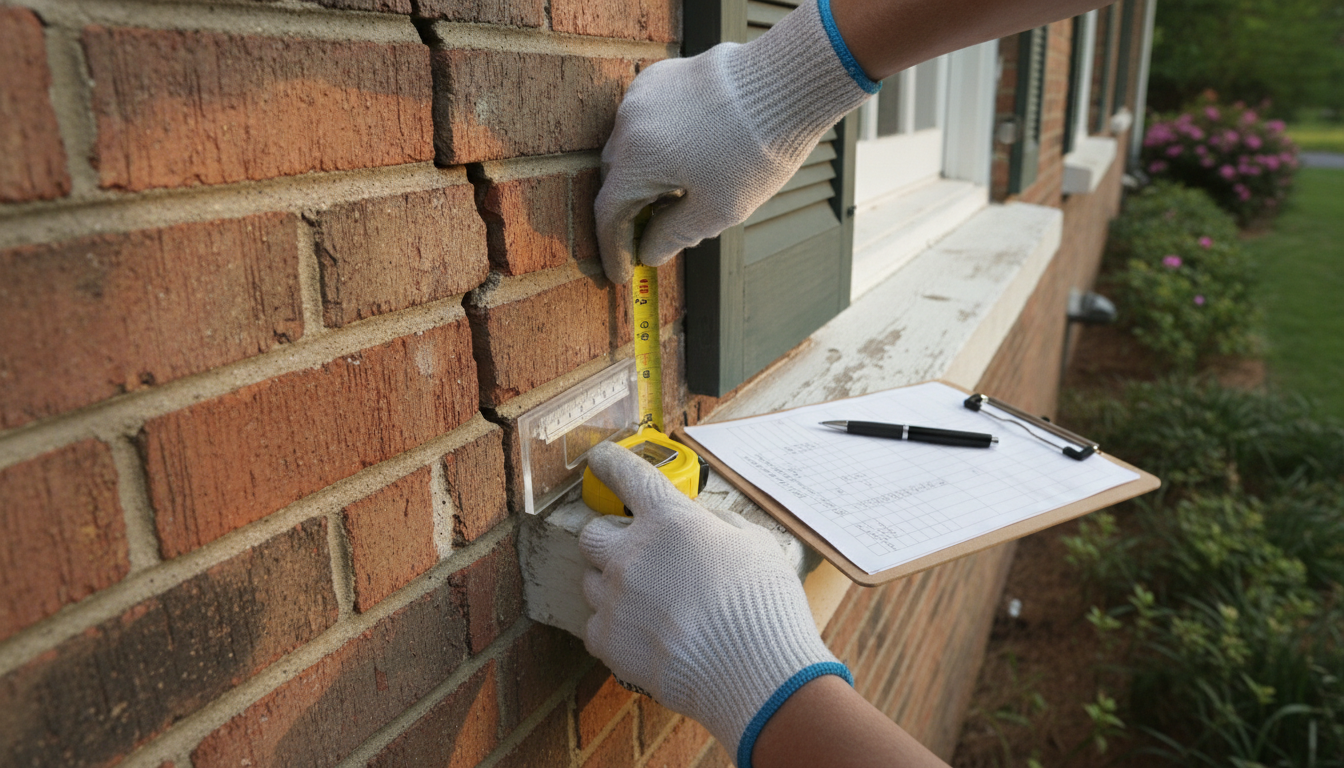
A licensed engineer comes to the property and evaluates the parts of the house that carry load: the foundation, the floor framing, the walls and load path, and the roof structure. They’ll go into the crawlspace or basement, and into the attic if there’s access. They measure crack widths, check floors for level, look at how framing members connect, and photograph what they find.
This is the part you don’t see, and it’s the reason to hire an engineer instead of a contractor. The engineer takes what was observed and works out the cause. Is the crack from settlement, from expansive clay soil, from a framing member that’s over-spanned, or from a renovation that cut the load path? Is the movement old and stable, or active? Is it a safety problem or a cosmetic one?
You get a written report that records the observations, includes photographs, explains the likely cause, rates how serious it is, and recommends a repair. On an engineer’s inspection, that report is sealed by a licensed Professional Engineer. That seal is what makes it hold up with a lender, an insurer, a seller in a negotiation, or a building department.
A good inspection includes time to answer your questions afterward. If the findings call for a repair, the next step is usually a repair design, which is priced separately.
Here are the factors that move the number, roughly in order of how much they matter.
The biggest variable is what you’re asking the engineer to look at. A focused inspection of one issue, like a single crack, one sagging floor area, or one beam, is the narrowest scope. A full structural evaluation of the whole house before a purchase covers more ground and takes longer. Forensic work, where the engineer has to determine the cause of damage for an insurance claim or dispute, needs the most documentation and analysis.
Be specific when you call. “My inspector flagged the foundation and I close in ten days” scopes differently from “I’m buying a 1940s house and want to know everything about the structure.”
Engineers price for time on site, and access drives time. A full basement with exposed framing is quick to evaluate. A tight crawlspace with low clearance, standing water, or insulation covering the joists takes longer, and sometimes limits what can be seen at all. Finished basements and drywalled ceilings hide framing, and the engineer may have to rely on indirect evidence.
If you’re buying, ask the seller’s agent about crawlspace access before the visit. Locked hatches and storage blocking the attic opening cost time.
Slab-on-grade, crawlspace, and basement foundations each fail in different ways, and each takes a different approach. In the Southeast, expansive clay soil is a recurring factor. Clay that swells in wet months and shrinks in dry ones moves foundations seasonally, and telling seasonal movement from progressive settlement takes judgment. Houses on slopes, on fill, or near large trees add complexity. If the foundation turns out to be the core problem, a foundation repair engineer designs the fix as a separate scope.
Most residential inspections are visual, with a level survey of the floors and crack measurements. Some situations call for more: a detailed floor elevation survey across the whole house, monitoring a crack over several weeks to see whether it’s moving, or coordinating soil testing. Each step adds cost, and a good engineer only recommends them when the answer depends on it.
A report that helps you decide whether to buy can be direct and focused. A report going to an insurance adjuster, an attorney, or a court has to document cause and extent much more rigorously, because someone will read it looking for holes. Tell the engineer upfront if the report could end up in a claim or dispute, so the scope matches.
Real estate deadlines are real. If you need the visit this week and the report in two days, say so when you call. Rush scheduling can affect the price, and it always affects availability.
Knowing the boundaries helps you compare quotes fairly.
Compare the fee to the decision it informs. A structural inspection usually costs a small fraction of what a structural repair costs, and a tiny fraction of what a house costs. The question is whether the information changes what you’ll do.
It almost always does in these situations:
It’s less likely to be worth it for a single hairline crack in drywall with no other symptoms, in a house where nothing else is changing. That’s usually shrinkage. Even then, a short call to describe it costs nothing.
Often, yes. A home inspector covers the whole house broadly, and a structural engineer covers the structure in depth. The inspector’s job is to notice; the engineer’s job is to diagnose. We cover this in detail in structural engineer vs. home inspector.
Neither one replaces a commercial property condition assessment, which is the standardized due-diligence report lenders use for apartment buildings and commercial properties. If you’re buying a single-family home, a residential structural inspection is the right service.
You’ll get a tighter, faster quote if you have these ready when you call:
With that information, an engineer can usually scope the inspection on the first call.
It depends on scope, access, foundation type, the testing involved, and what the report is for. A focused look at one issue costs less than a full structural evaluation of the whole house, and forensic reports for insurance or litigation cost more because they need more documentation. The most accurate way to get a number is to describe the house and the concern to the engineer, who can scope it on the call.
Usually, because it’s a different service. A home inspector does a broad visual survey of every system. A structural engineer evaluates the structure in depth, determines the cause of problems, and seals a report with their professional license. You’re paying for diagnosis and professional accountability, not a checklist.
The foundation, crawlspace or basement, floor joists and beams, walls and the load path through the house, and the roof and attic framing. They measure cracks and floor levels, check connections and supports, look for water, rot, or insect damage, and focus on any area you’re concerned about.
A foundation-only inspection is usually narrower in scope than a whole-house structural evaluation, so it is typically less. In practice, foundation problems show up in the framing and walls above, so engineers often look beyond the foundation to understand what’s happening. Tell the engineer what you’ve seen and they’ll recommend the right scope.
Sometimes. If the inspection is part of a covered claim, such as storm, impact, or water damage, the insurer may pay for it or reimburse it. Policies vary widely. Check with your adjuster before scheduling, and tell the engineer the report is for a claim.
Yes, and that’s one of the most common reasons buyers order one. A sealed report gives specific findings and recommended repairs, which carries more weight with a seller than a general inspection note. Schedule it within your option or due-diligence period so you still have room to act on it.
Strut E&I provides residential structural inspections with sealed reports across Greater Atlanta and throughout Georgia, the Carolinas, Florida, Tennessee, and New Jersey. Every inspection gets a dedicated licensed structural engineer.
Call (404) 480-5555, email info@struteni.com, or contact us with the address and what you’ve noticed, and we’ll scope your inspection on the first call.