

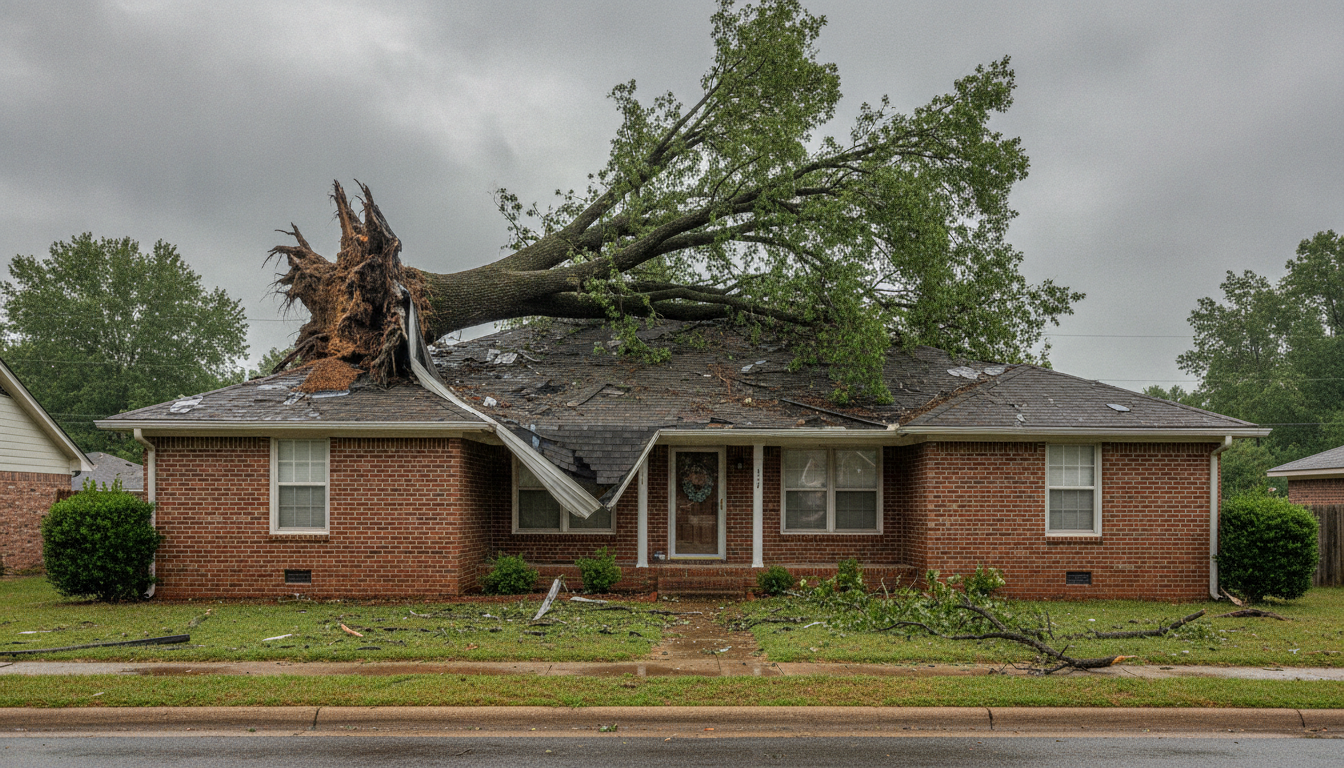
When a tree falls on a house, the damage you can see is rarely the whole story. A trunk resting on a roof is obvious. What isn’t obvious is the cracked rafter two bays over, the top plate that shifted half an inch, or the ceiling joists now carrying load they were never meant to carry. Those are the conditions that decide whether a home is safe to occupy and how it should be repaired.
This guide walks through the first hours after a tree fell on your house, what to document, and why a licensed engineer belongs in the process. Strut Engineering & Investment, Inc. performs forensic structural engineering for storm and impact damage, and the sealed report from that work is often what settles the repair scope with an insurer or a contractor.
Everything else waits until people are out of danger.
If the damage is severe, local building officials may tag the home as unsafe until it is evaluated. Respect that tag.
This is the step people skip. It’s natural to want to go in and grab belongings, check the attic, or start cleaning up. But impact damage behaves differently from wear and tear. A rafter or ceiling joist can be cracked through and still look intact from below, held in place by sheathing and drywall. Add the weight of wet insulation, rain, or someone walking in the attic, and it can let go.
Until a qualified professional has looked at the structure, treat the rooms under and next to the impact as off-limits.
Insurance claims go more smoothly when the evidence is gathered early, before the tree is removed and before temporary repairs change the scene.
Emergency measures to prevent further damage, such as tarping the roof, are generally expected. Permanent repairs should wait until the damage has been properly assessed and the claim has a scope.
A roofer can tell you which shingles and decking need replacing. A general contractor can price the visible repairs. A structural engineer answers a different question: what happened to the structure, and what does it take to restore it?
Rafters and trusses take the first hit. An engineer checks for broken, cracked, and split members, failed connections at the ridge and at the walls, and damaged truss plates. Trusses deserve special care. A single damaged web or chord can compromise an entire engineered truss, and trusses generally should not be field-repaired without a design.
In many homes, ceiling joists tie the walls together and keep the roof from spreading. When a tree drives load into the roof, it can push that load into ceiling joists, interior walls, and beams that weren’t designed for it. The engineer traces where the force went, from the impact point down through the framing to the foundation.
The force of an impact can rack walls, shift top plates, and pull connections loose. Exterior walls may be pushed out of plumb. Brick veneer can crack or separate from the framing behind it. These conditions often explain why doors and windows near the impact suddenly stick.
The damage that causes trouble later is usually hidden. Water entering through the breach soaks insulation, sheathing, and framing. Our guide to water damage and structural integrity explains why that matters weeks after the storm. If the tree uprooted near the house, the root ball can also disturb soil next to the foundation.
The investigative method is the same one we describe in how forensic engineers investigate building failures: observe, measure, trace the load path, and separate storm damage from pre-existing conditions.
After a tree strike, several parties have a stake in the answer: you, your insurer, the adjuster, and the contractor who will make the repair. Disagreements usually come down to scope. Is that cracked rafter storm damage or old? Does the wall need to be rebuilt or just repaired? Does the whole truss need replacing?
An independent structural engineer’s report gives everyone the same facts. It documents the damage observed, separates impact damage from pre-existing conditions where the evidence allows, and specifies what the repair needs to include. Because it is sealed by a licensed professional engineer, it carries weight with building departments, adjusters, and contractors.
We provide the same kind of independent documentation after fires through our fire damage structural assessment service. If a claim turns into a dispute, our expert witness and litigation support work picks up from there.
Trees and houses collide often in the Southeast. Hurricanes and tropical storms bring sustained wind over wide areas. Summer thunderstorms produce short, violent downbursts that topple trees without much warning. And after long periods of rain, saturated clay soils lose their grip on root systems, so mature trees can fall in winds that would not normally move them.
Many neighborhoods across Greater Atlanta and the rest of the region have large hardwoods and pines standing close to homes. After a storm passes, it’s worth walking your property and looking for leaning trees, lifted soil at the base, and cracked or hanging limbs over the roof.
Call an engineer after a tree strike if:
For smaller impacts where a limb only damaged shingles and gutters, a roofer may be enough. When in doubt, an inspection costs far less than a repair done on the wrong scope. Our residential structural inspection service covers storm-damaged homes, and our guide to warning signs of structural damage can help you decide.
Get everyone out of the damaged area, stay clear of downed power lines, leave and call for help if you smell gas, and contact your insurer. Do not climb on the roof or cut the tree yourself. Arrange emergency tarping once the area is safe.
It depends on where the tree hit and what it damaged. Damage to rafters, trusses, ceiling joists, or walls can be hidden behind finishes. Avoid the affected rooms until a qualified professional has evaluated the structure, and follow any instructions from your local building official.
Many policies cover damage when a tree falls on a covered structure, but coverage details vary by policy and circumstance. Contact your insurer promptly, document everything, and keep receipts for emergency work. Your agent can explain your specific coverage.
A roofer repairs the roof covering and decking. A structural engineer evaluates the framing, connections, and load path underneath, identifies hidden damage, and specifies the structural repair. That evaluation protects you from a repair that looks finished but leaves damaged framing in place.
An independent sealed report documents the damage and the repair required, which gives you, the adjuster, and the contractor the same basis for the scope. It does not guarantee a claim outcome, but it replaces opinions with an engineer’s documented findings.
As soon as the area is safe and emergency measures are in place, ideally before permanent repairs begin. Early documentation captures the damage before cleanup changes it and before water intrusion causes secondary damage.
If a tree has come down on your home or a property you manage, Strut E&I can assess the structure, document the damage, and specify the repair in an independent sealed report. Call (404) 480-5555, email info@struteni.com, or contact our team to schedule an assessment.